
Restorative
Inlays & Onlays in South Jordan, UT
Inlays and onlays are a middle-ground restoration between a filling and a crown. They're custom-made pieces, typically crafted from porcelain, that bond into a tooth where a filling wouldn't be strong enough but a full crown would remove more tooth structure than necessary. They're strong, natural-looking, and conservative in the best sense of the word.
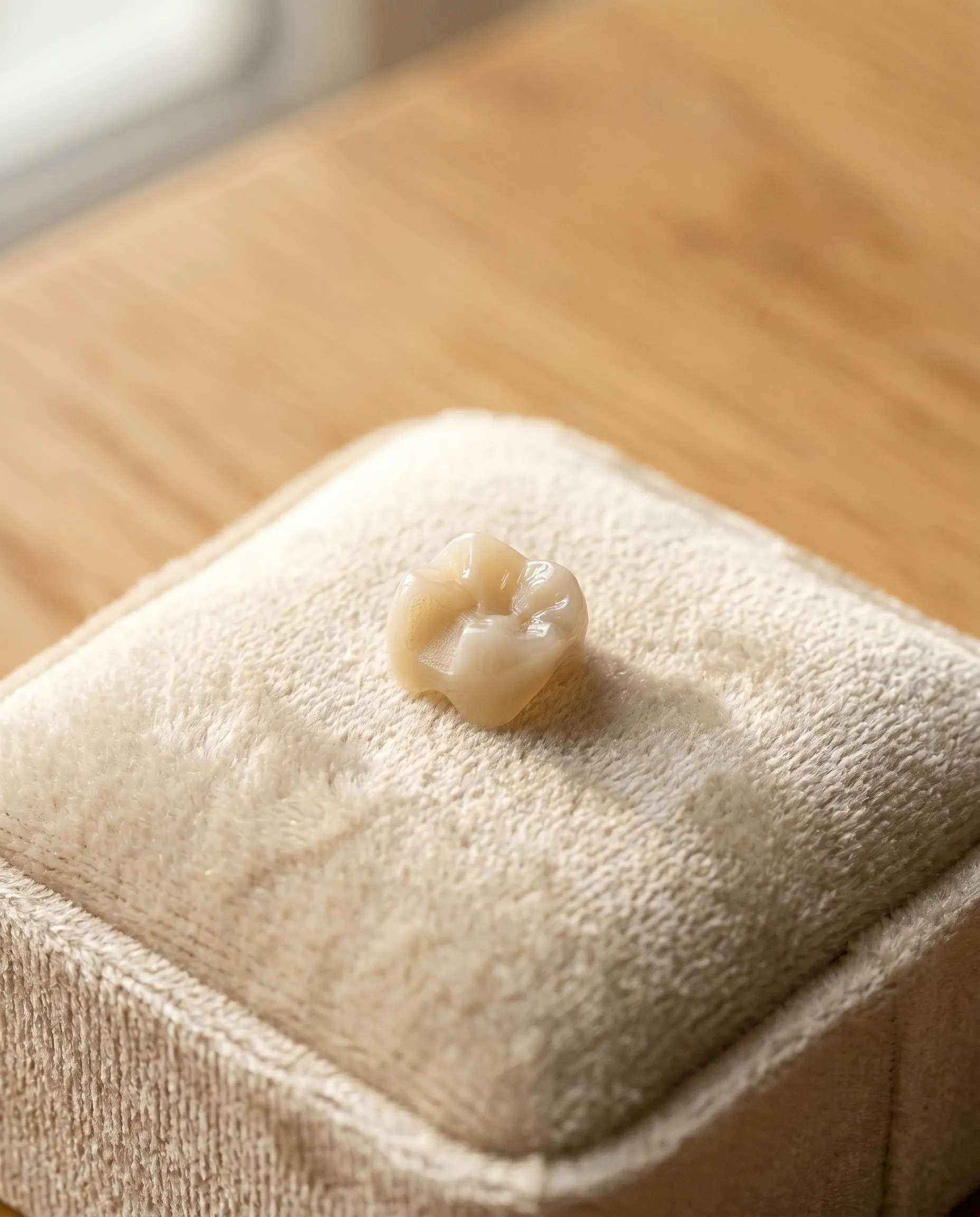
When an inlay or onlay is the right choice
Picture a molar where a large old filling has started to fail, or a tooth with significant but not extensive decay. A new filling might not hold up long-term because there isn't enough tooth structure to support it. A crown would work but requires cutting the tooth down on all sides.
An inlay (fits within the cusps of the tooth) or onlay (covers one or more cusps) preserves as much healthy tooth as possible while delivering the strength and durability of a lab-made restoration. For the right tooth, it's often the best answer.
Materials and appearance
The inlays and onlays we place are typically porcelain or ceramic, matched precisely to your natural tooth color. Once bonded in, they're virtually indistinguishable from the surrounding enamel. They also resist staining and wear beautifully over time.
Gold inlays are still an option for patients who prefer them; they're exceptionally durable but obviously more visible. Most modern patients choose porcelain for the aesthetics.
The process
Inlay and onlay placement is similar to crown placement and typically takes two visits. At the first, Dr. Osborne removes any decay and shapes the cavity, takes a digital scan or impression, and places a temporary. The permanent inlay or onlay is crafted at a dental lab and fitted at a second visit, usually two to three weeks later.
At that second visit, the temporary comes off, the permanent restoration is checked for fit and contact with adjacent teeth, and once everything's right, it's bonded permanently in place.
How long they last
With good home care and regular cleanings, an inlay or onlay typically lasts 15 to 30 years. They tend to outlast direct fillings significantly because the lab-made piece is stronger and bonds more reliably.
Common questions
What's the difference between an inlay and an onlay?
An inlay fits within the cusps of the tooth (the four raised points on a molar's chewing surface). An onlay extends over one or more of those cusps. Otherwise they're the same idea, just different coverage.
How is this different from a filling?
A filling is placed directly in the tooth in one visit and hardened in place. An inlay or onlay is crafted outside the mouth to fit precisely, then bonded in. The lab-made piece is stronger and typically lasts longer, especially for larger restorations.
Related
Other restorative services.
-
Tooth-Colored Fillings
Composite resin fillings that match your natural tooth color and bond directly to the tooth. Modern, mercury-free, and virtually invisible.
Learn more -
Dental Crowns
Custom porcelain crowns that restore strength, shape, and appearance to teeth that are broken, heavily filled, or after a root canal.
Learn more -
Dental Bridges
Fixed replacements for one or more missing teeth, anchored to healthy adjacent teeth or implants for a stable, long-lasting solution.
Learn more -
Root Canal Therapy
Gentle endodontic treatment to save teeth with infected or damaged pulp, relieving pain and keeping your natural tooth in place.
Learn more -
Tooth Extractions
Comfortable tooth removal when a tooth can't be saved, with clear guidance on replacement options so there's no uncertainty about next steps.
Learn more -
Dentures
Full and partial dentures designed for a natural appearance and stable function. Options range from traditional to implant-supported.
Learn more
Schedule your visit
Let's give you a reason to smile.
Whether you're new to South Jordan or looking for a dentist who'll actually listen, we'd love to meet you. Schedule your visit today.