
Restorative
Dental Implant Restorations in South Jordan, UT
Dental implants are the modern gold standard for replacing missing teeth. They look, feel, and function like natural teeth, preserve the jaw bone, and often last a lifetime with good care. Dr. Osborne handles the restoration side, placing crowns, bridges, and dentures onto implants that have been placed by a trusted surgical specialist we partner with in the Salt Lake area.
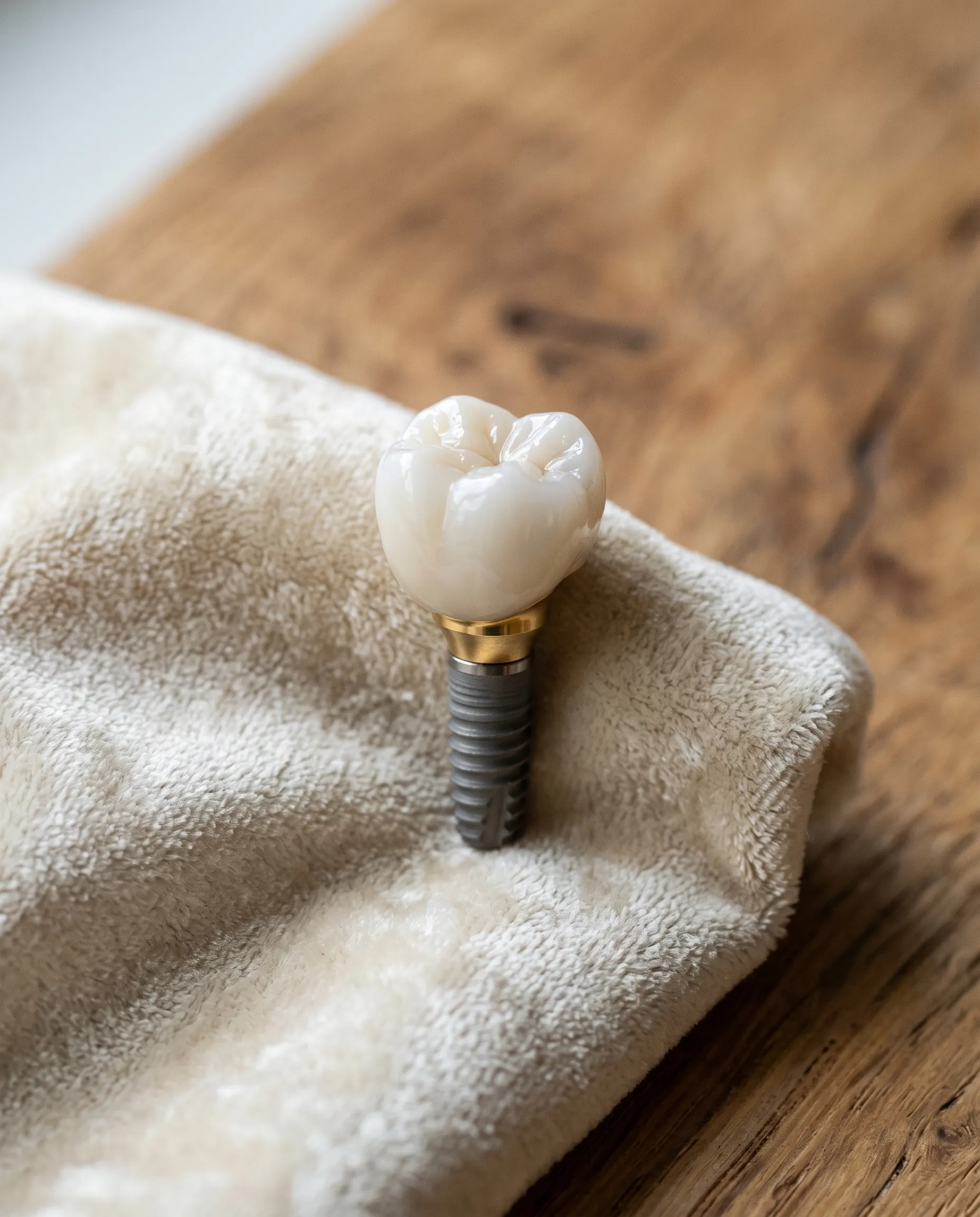
What a dental implant actually is
A dental implant is a small titanium post placed into the jaw bone where a tooth used to be. Titanium is remarkably biocompatible, and within a few months, the bone grows onto and around the implant in a process called osseointegration. Once the implant is fully integrated, it functions as an artificial tooth root, stable enough to support a crown, bridge, or denture indefinitely.
The implant itself doesn't decay, and the bone around it stays healthy and stimulated, which is one of the biggest advantages over bridges or removable dentures. It's the only tooth replacement option that actually prevents bone loss after tooth loss.
Single tooth, multiple teeth, or full arch
An implant can replace a single missing tooth, with one implant supporting one crown. For multiple missing teeth in a row, a few implants can support a bridge, which is often a better long-term solution than a traditional bridge because it doesn't require altering the neighboring teeth.
For patients missing all the teeth in an arch, implant-supported dentures offer dramatic improvements in function and comfort compared to traditional dentures. Two to four implants can support a full arch of teeth, either as a removable overdenture or as a fixed prosthesis that stays in your mouth permanently.
How the restoration process works
Dr. Osborne coordinates the full treatment plan from start to finish, but the implant placement itself is done by an oral surgeon or periodontist who specializes in implant surgery. The placement appointment is typically an hour or less and is performed under local anesthesia, with sedation options available.
After placement, the implant needs three to six months to integrate with the bone. During that time, you can often wear a temporary tooth so there's no visible gap. Once integration is confirmed, Dr. Osborne takes impressions, designs the crown or bridge, and places the final restoration at a follow-up visit.
Longevity and care
With good oral hygiene and regular dental visits, dental implants have success rates above 95 percent and often last a lifetime. The crown on top may need replacement eventually (typically 10 to 20 years), but the implant itself generally doesn't.
Caring for an implant is the same as caring for a natural tooth: brushing twice daily, flossing (there are special flosses designed for implants), and keeping up with cleanings. Peri-implantitis (gum disease around an implant) is the main long-term risk, and it's entirely preventable with consistent home care.
Timeline and what to expect financially
Implant treatment typically spans four to six months from start to finish, most of which is simply waiting for osseointegration. The actual appointments are spread out: initial consultation, implant placement, a healing period, and then restoration with the final crown or bridge. The total active chair time is usually less than many patients expect.
Cost varies based on the number of implants and the final restoration. A single-tooth implant with a crown typically runs $3,500 to $5,500 total. Multiple implants and full-arch restorations cost more but deliver proportional value. Many insurance plans now cover some portion of implant treatment, and we offer financing options that break the investment into manageable monthly payments. We'll give you a detailed written estimate after your consultation so you can plan accordingly.
Common questions
Am I a candidate for dental implants?
Most healthy adults are candidates. You need sufficient bone density to support the implant (which can sometimes be augmented with a bone graft if needed) and healthy gums. Certain medical conditions and heavy smoking can affect success rates, but they're not always absolute contraindications. A consultation lets us give you a specific answer.
Does the implant placement hurt?
Most patients report less discomfort than they expected. The placement is done with local anesthesia and often light sedation. Post-operative soreness for a day or two is normal and is managed well with over-the-counter medication. It's often easier than an extraction.
Related
Other restorative services.
-
Tooth-Colored Fillings
Composite resin fillings that match your natural tooth color and bond directly to the tooth. Modern, mercury-free, and virtually invisible.
Learn more -
Dental Crowns
Custom porcelain crowns that restore strength, shape, and appearance to teeth that are broken, heavily filled, or after a root canal.
Learn more -
Dental Bridges
Fixed replacements for one or more missing teeth, anchored to healthy adjacent teeth or implants for a stable, long-lasting solution.
Learn more -
Inlays & Onlays
Conservative indirect restorations crafted outside the mouth and bonded in. Ideal when a filling isn't enough but a full crown isn't necessary.
Learn more -
Root Canal Therapy
Gentle endodontic treatment to save teeth with infected or damaged pulp, relieving pain and keeping your natural tooth in place.
Learn more -
Tooth Extractions
Comfortable tooth removal when a tooth can't be saved, with clear guidance on replacement options so there's no uncertainty about next steps.
Learn more
Schedule your visit
Let's give you a reason to smile.
Whether you're new to South Jordan or looking for a dentist who'll actually listen, we'd love to meet you. Schedule your visit today.