
Restorative
Dental Bridges in South Jordan, UT
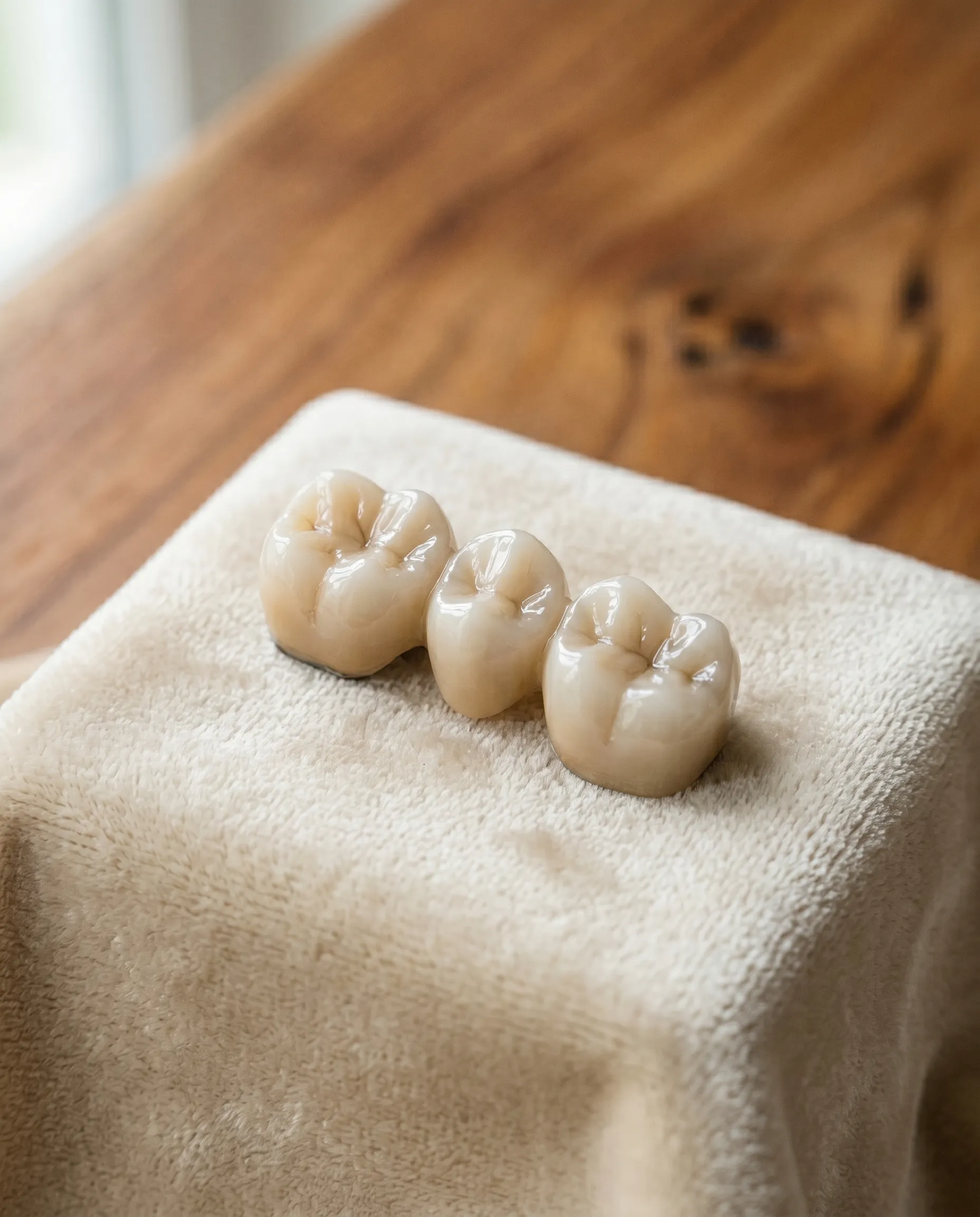
A dental bridge replaces one or more missing teeth by anchoring a replacement tooth (or teeth) to the healthy teeth on either side. It's a permanent, non-removable solution that restores function, prevents neighboring teeth from shifting, and keeps your bite stable for the long term. Dr. Osborne offers both traditional bridges and implant-supported bridges, and will walk you through which approach fits your situation.
Why replacing missing teeth matters
A missing tooth is more than a cosmetic concern. When a tooth is lost, the surrounding teeth begin to drift toward the empty space, which disrupts your bite, causes uneven wear on other teeth, and can lead to jaw pain over time. The jaw bone in the empty area also starts to shrink, which can change your facial appearance over years and complicate future treatments like implants or dentures.
A well-placed bridge prevents all of that. It keeps the neighboring teeth in their proper position, restores full chewing function, and gives you back a complete smile that's easy to care for and comfortable to live with.
Traditional vs. implant-supported bridges
A traditional bridge uses crowns on the adjacent teeth as anchors, with the replacement tooth (called a pontic) suspended between them. It's a good option when those neighboring teeth already have crowns, large fillings, or would benefit from coverage themselves. The entire unit is cemented in place and looks and functions like natural teeth.
An implant-supported bridge uses dental implants as anchors instead of natural teeth. This approach preserves the healthy teeth on either side (which don't need to be shaped for crowns) and stimulates the underlying bone, preventing the shrinkage that typically follows tooth loss. It's a more involved process, but it's often the longer-lasting option. Dr. Osborne will discuss both approaches so you can make an informed decision.
What to expect during treatment
For a traditional bridge, the process takes two visits spaced two to three weeks apart. At the first, Dr. Osborne shapes the anchor teeth, takes impressions, and places a temporary bridge. The permanent bridge is fabricated at a dental lab. At the second visit, the temporary is removed and the permanent bridge is cemented in place.
For an implant-supported bridge, the timeline is longer because the implants need time to integrate with your jaw bone, typically three to six months. Once integration is complete, the bridge is placed on top of the implants in a process similar to a traditional bridge.
Longevity and care
With good home care and regular cleanings, a traditional bridge typically lasts 10 to 15 years, sometimes longer. Implant-supported bridges often last 20 years or more. Caring for a bridge is similar to caring for natural teeth, with one important addition: you need to clean underneath the pontic using a floss threader, a water flosser, or special proxy brushes. Your hygienist will show you how.
Comparing your tooth replacement options
When you're missing a tooth, you generally have three paths: a bridge, a dental implant, or a partial denture. Each has tradeoffs. A traditional bridge is the middle option in cost and time, uses no surgery, but involves altering the adjacent teeth. An implant is the longest-lasting and most bone-friendly option but takes longer and costs more upfront. A partial denture is the least expensive but also the least stable and most obvious.
For many patients the decision comes down to the health of the adjacent teeth. If they're already crowned or could benefit from restoration, a bridge is a natural choice. If the neighboring teeth are pristine, an implant is often the wiser long-term investment. Dr. Osborne will evaluate your specific situation and give you an honest recommendation, not just push the more expensive option.
Common questions
How do I clean under a bridge?
Regular flossing can't pass between teeth of a bridge because they're connected. You'll use a floss threader (a small plastic loop that threads floss under the pontic), a water flosser, or small interdental brushes. Your hygienist will demonstrate at your appointment.
Is a bridge better than an implant?
Neither is universally better; it depends on your specific situation. Implants are generally the longer-lasting, more bone-friendly option but require more time and higher upfront cost. Bridges are faster and often less expensive but involve altering the neighboring teeth. We'll walk you through both options and help you decide what fits your goals and budget.
Related
Other restorative services.
-
Tooth-Colored Fillings
Composite resin fillings that match your natural tooth color and bond directly to the tooth. Modern, mercury-free, and virtually invisible.
Learn more -
Dental Crowns
Custom porcelain crowns that restore strength, shape, and appearance to teeth that are broken, heavily filled, or after a root canal.
Learn more -
Inlays & Onlays
Conservative indirect restorations crafted outside the mouth and bonded in. Ideal when a filling isn't enough but a full crown isn't necessary.
Learn more -
Root Canal Therapy
Gentle endodontic treatment to save teeth with infected or damaged pulp, relieving pain and keeping your natural tooth in place.
Learn more -
Tooth Extractions
Comfortable tooth removal when a tooth can't be saved, with clear guidance on replacement options so there's no uncertainty about next steps.
Learn more -
Dentures
Full and partial dentures designed for a natural appearance and stable function. Options range from traditional to implant-supported.
Learn more
Schedule your visit
Let's give you a reason to smile.
Whether you're new to South Jordan or looking for a dentist who'll actually listen, we'd love to meet you. Schedule your visit today.