
Restorative
Dentures in South Jordan, UT
Dentures have come a long way from what you may remember from a grandparent's set. Modern full and partial dentures are natural-looking, comfortable, and designed to stay in place while you eat and talk. Whether you're replacing a few teeth or a full arch, Dr. Osborne will help you find the solution that fits your needs, lifestyle, and budget, including implant-supported options that feel dramatically more stable than traditional dentures.
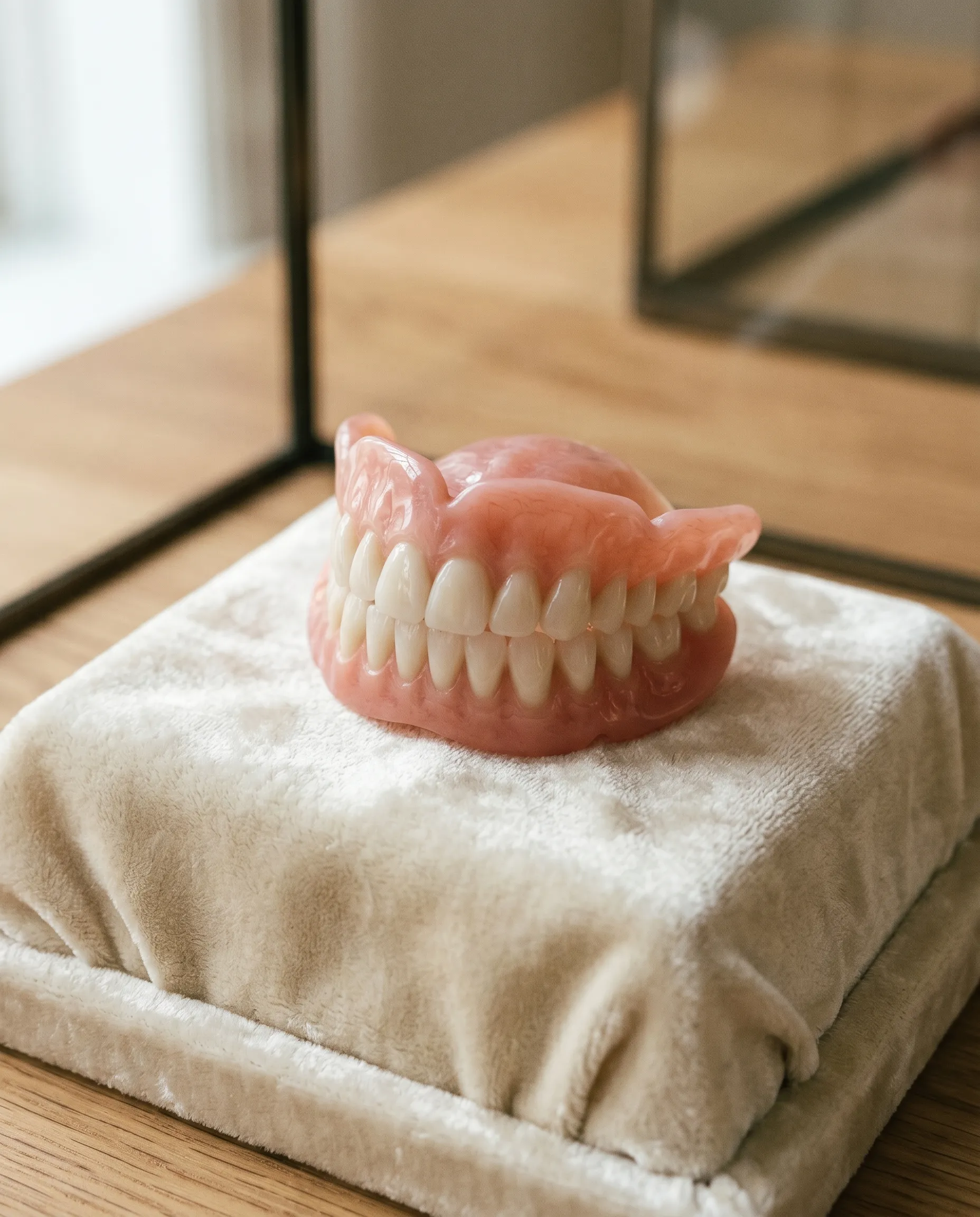
Full and partial dentures
Full dentures replace an entire upper or lower arch of teeth. They're custom fabricated to fit your mouth precisely and shaped to support your lips and cheeks in a way that often takes years off your appearance. Partial dentures replace several missing teeth while clipping onto your remaining natural teeth for stability.
Modern dentures use advanced materials that look remarkably natural. The gum tissue is color-matched to your complexion, and the teeth are arranged with attention to your facial features, age, and preferences. A well-made denture shouldn't look like a denture; it should just look like your smile.
Implant-supported dentures
If traditional dentures feel loose or uncomfortable, implant-supported dentures are often a game-changer. Two to four dental implants are placed in the jaw, and the denture snaps onto them for a secure, stable fit. No adhesive, no slipping while you eat, no whistling while you talk.
Patients who switch from traditional to implant-supported dentures consistently describe the difference as life-changing. You can eat foods you'd given up on, like apples, steak, and corn on the cob. You can laugh and speak without worry. Many patients describe it as the closest thing to having their natural teeth back.
The process and timeline
For traditional dentures, the process takes about four to six appointments over six to eight weeks. Dr. Osborne takes impressions, measurements, and bite registrations, and works closely with the dental lab to perfect the fit and appearance before the final delivery. You'll have try-in appointments where you can see and adjust how the teeth look before the final dentures are made.
For implant-supported dentures, the timeline is longer because the implants need time to integrate with your jaw bone, typically three to six months. During that time you can often wear a temporary denture so you're never without teeth. Once integration is complete, the final denture is attached.
Adjusting to dentures
New dentures take some getting used to, even for experienced wearers. The first few weeks you may notice increased saliva, some slurring when you speak, and awkwardness when chewing. All of this resolves as your mouth adapts, usually within two to four weeks. Starting with softer foods and cutting them into smaller pieces helps during the adjustment period.
Come in if something feels off. Small sore spots can usually be eliminated with a brief adjustment, and we'd rather fix a problem while it's small than have you live with discomfort. Most denture adjustments only take 10 to 15 minutes.
Setting realistic expectations
The best dentures still aren't exactly like natural teeth, and it's worth knowing that going in. Traditional dentures have a ceiling on how stable they can feel, and almost everyone notices some change in chewing efficiency and the sense of taste (particularly on upper dentures that cover the palate). That said, modern materials and fabrication techniques have dramatically improved what's possible. Patients who had denture experiences decades ago are often surprised by how much better the current technology feels.
If you're coming from a lifetime of natural teeth, implant-supported dentures are almost always the closest experience. The difference in stability, chewing power, and comfort is significant enough that many patients consider the additional investment worthwhile. We'll have an honest conversation about what each option will actually feel like so you can make the right choice for your situation.
Common questions
How long do dentures last?
Traditional dentures typically last 5 to 10 years before they need to be relined or replaced, depending on how your mouth changes over time. Implant-supported dentures last much longer, often 20 years or more, with periodic maintenance on the attachment components.
Can I sleep with my dentures in?
We recommend taking dentures out at night so your gum tissue has time to rest. Store them in water or denture soak solution to keep them from drying out, and clean them thoroughly in the morning before putting them back in.
Related
Other restorative services.
-
Tooth-Colored Fillings
Composite resin fillings that match your natural tooth color and bond directly to the tooth. Modern, mercury-free, and virtually invisible.
Learn more -
Dental Crowns
Custom porcelain crowns that restore strength, shape, and appearance to teeth that are broken, heavily filled, or after a root canal.
Learn more -
Dental Bridges
Fixed replacements for one or more missing teeth, anchored to healthy adjacent teeth or implants for a stable, long-lasting solution.
Learn more -
Inlays & Onlays
Conservative indirect restorations crafted outside the mouth and bonded in. Ideal when a filling isn't enough but a full crown isn't necessary.
Learn more -
Root Canal Therapy
Gentle endodontic treatment to save teeth with infected or damaged pulp, relieving pain and keeping your natural tooth in place.
Learn more -
Tooth Extractions
Comfortable tooth removal when a tooth can't be saved, with clear guidance on replacement options so there's no uncertainty about next steps.
Learn more
Schedule your visit
Let's give you a reason to smile.
Whether you're new to South Jordan or looking for a dentist who'll actually listen, we'd love to meet you. Schedule your visit today.